
Choosing the Perfect Handle Material for Your Next Knife
A knife blade gets most of the attention, but the handle is what you actually live with every day. It affects comfort, grip, durability, maintenance, weight, and even how confident the knife feels in your hand. Whether you carry a knife for work, outdoor use, everyday carry, or collecting, choosing the right handle material can completely change the experience.
Here’s a breakdown of the most common knife handle materials and what makes each one worth considering.

Why Handle Material Matters
The handle is the part of the knife you interact with the most. It influences how the knife feels in your hand, how secure your grip is, and how long the knife lasts under different conditions. A poorly chosen handle can cause discomfort, slipping, or even injury during use. On the other hand, a well-chosen handle enhances control, safety, and enjoyment.
Key factors to consider when choosing a handle material include:
Comfort: How the handle feels during extended use
Grip: How secure the handle is when wet or oily
Durability: Resistance to wear, moisture, and temperature changes
Maintenance: How much care the handle requires
Aesthetics: The look and style of the handle
Common Handle Materials and Their Characteristics
Wood Handles
Wood is a classic choice for knife handles. It offers natural warmth and beauty, with a wide range of colors and grain patterns.
Pros: Comfortable, attractive, good grip when dry
Cons: Can absorb moisture, prone to cracking or swelling if not treated
Examples include hardwoods like walnut, rosewood, and stabilized wood, which is treated to resist moisture and wear.
Synthetic Handles

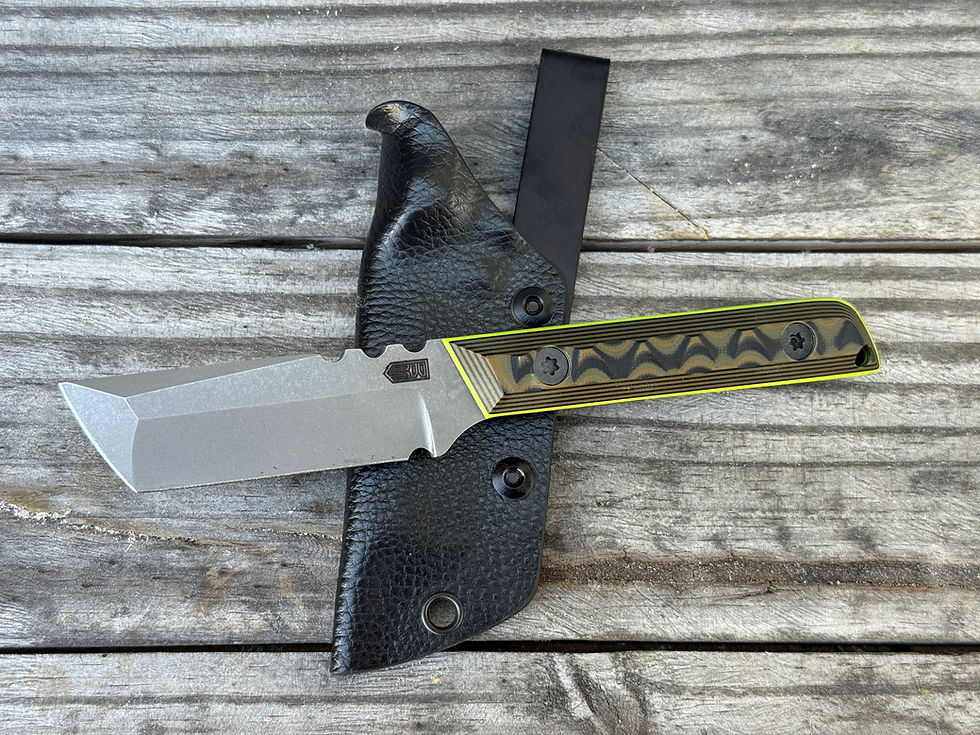
Materials like Micarta, G-10, and carbon fiber fall under synthetic handles. These are made from layers of fabric or fiberglass bonded with resin.
Pros: Extremely durable, moisture-resistant, lightweight, consistent texture
Cons: Can feel cold or hard, less natural appearance
Micarta, for example, offers a textured grip that improves with use, while G-10 is known for its toughness and resistance to chemicals.
Metal Handles

Handles made from stainless steel, aluminum, or titanium provide strength and a modern look.
Pros: Very durable, easy to clean, sleek design
Cons: Can be slippery when wet, may feel cold or heavy
Some metal handles feature textured patterns or rubber inserts to improve grip.
Rubber and Thermoplastic Handles

Rubberized or thermoplastic handles provide excellent grip and shock absorption. Examples of these materials are GripTec and Voodoo Resin
Pros: Comfortable, non-slip, good for wet conditions
Cons: Can wear out or degrade over time
Materials like Kraton or Santoprene are common in these handles, offering a soft but firm grip.
Bone, Horn, and Other Natural Materials

These traditional materials add unique character to knives.
Pros: Unique appearance, good grip, collectible value
Cons: Can be brittle, sensitive to moisture and temperature
Best for: Custom knives, collectors, traditional styles
Bone and horn handles require more care but can be stunning when polished.
Which Handle Material Is Best?
There isn’t a universal answer. The best knife handle material depends on your priorities.
Choose Micarta if you want:
Hard-use durability
Excellent grip
A broken-in feel over time
Choose G10 if you want:
Maximum toughness
Minimal maintenance
Aggressive texture and control
Choose Wood or Bone if you want:
Traditional craftsmanship
Natural beauty
A one-of-a-kind appearance
Choose Rubber or Thermoplastic if you want:
Lightweight carry
Premium modern aesthetics
High-performance materials
Choose Metal if you want:
Premium strength
Modern design
Maintenance Tips for Different Handle Materials
Wood: Oil regularly with mineral oil or specialized wood oils to prevent drying and cracking.
Synthetic: Clean with mild soap and water; avoid harsh chemicals.
Metal: Wipe dry after use to prevent corrosion; apply light oil if needed.
Rubber/Thermoplastic: Clean with soap and water; replace if worn.
Bone/Horn: Avoid prolonged moisture exposure; polish occasionally.
Final Thoughts on Choosing Your Knife Handle
A knife handle does more than hold the blade. It defines how the knife feels, performs, and ages with use. The right material can turn a good knife into one you carry every single day.
If your knife is going to see hard work, focus on durability and grip. If it’s a collector piece or heirloom build, natural materials may be the better fit. And if you want the best mix of performance and style, modern composites offer incredible options.
At the end of the day, the best handle material is the one that fits your hand, your environment, and the way you actually use your knife.


Comments